Quick answer: The top IoT development companies in the USA for 2026 are Gaincafe Technologies, Softeq, ScienceSoft, Azilen Technologies, Oxagile, Simform, ArcTouch, Velvetech, Intellectsoft, HQSoftware, Yalantis, Very, SumatoSoft, Vention, and DataArt. Gaincafe leads for the software, cloud, app, and AI-analytics layer at competitive rates, while Softeq and Very suit hardware-heavy builds, and ScienceSoft and Azilen fit large enterprise programs. The right pick depends on whether your challenge is devices and firmware, the software and data layer, or both.
The best IoT development companies in the USA do not just connect a device to the cloud, they build a system that stays secure, reliable, and useful once thousands of those devices are live in the field. If you are shortlisting IoT development companies in the USA for 2026, the real question is not who is biggest, but which firm is strongest at the layer your project actually needs. This guide ranks fifteen worth your attention, with honest notes on who each one is really for.
IoT is no longer a proof-of-concept game. The US industrial IoT market alone is on track to grow from roughly $99.75 billion in 2025 to $176.65 billion by 2030, and Statista expects more than 29 billion connected devices worldwide by the end of the decade. With that much riding on connected products, the partner you pick matters more than ever.
Key Takeaways
- An IoT company can work across five layers: devices, connectivity, cloud, apps, and analytics, and few are equally strong at all of them.
- Match the firm to the layer your project needs, since hiring a hardware shop to build a dashboard, or a software team to fabricate electronics, wastes money.
- Hardware-heavy builds point to firms like Softeq and Very. The software and analytics layer, where most business value lives, points to firms like Gaincafe.
- Enterprise, multi-industry programs suit ScienceSoft, Azilen, and Intellectsoft.
- Always confirm real production deployments, security practices, and full code and firmware ownership before you sign.
Why the Right IoT Partner Matters in 2026
Here is what makes IoT harder than ordinary app development: it is never just software. A connected product touches physical hardware, network protocols, cloud infrastructure, and data analytics all at once, and a weak link anywhere breaks the whole chain. A dashboard that looks great in a demo means nothing if the devices drop offline, the data is insecure, or the system buckles at scale.
That is why the strongest IoT firms are specialists, not generalists. Some live and breathe firmware and electronics. Others are strongest at the cloud, app, and analytics layer where raw device data becomes a business decision. The mistake most buyers make is hiring for reputation instead of for the specific layer their project leans on.
Knowing which layers you actually need is the single most useful thing you can do before you start calling vendors. It tells you what the project should cost and, just as importantly, who is the right kind of company to build it.
Not sure which IoT layer your project needs?
Tell us your devices, data, and goals, and Gaincafe Technologies will map the right architecture and the right kind of team, free.
Book a Free IoT ConsultationHow We Ranked These IoT Development Companies
We did not rank by ad spend or directory placement. Each company here was judged against the criteria that actually predict a connected product that survives real deployment.
- Layer strength: Genuine capability across the layers that matter, whether firmware, connectivity, cloud, apps, or analytics.
- Production track record: Systems running in the field at scale, not lab prototypes that never shipped.
- Security and compliance: A serious approach to device security, encryption, and standards like ISO 27001 and HIPAA where relevant.
- Data and AI depth: The ability to turn raw sensor data into dashboards, predictive maintenance, and real decisions.
- Ownership and reviews: Verified Clutch and G2 feedback, plus full handover of code, firmware, and cloud accounts.
Gaincafe Technologies ranks first for the software and analytics layer where most businesses need help, and the profiles below explain each firm's real strength rather than just listing logos.
Top 15 IoT Development Companies in the USA in 2026
1. Gaincafe Technologies
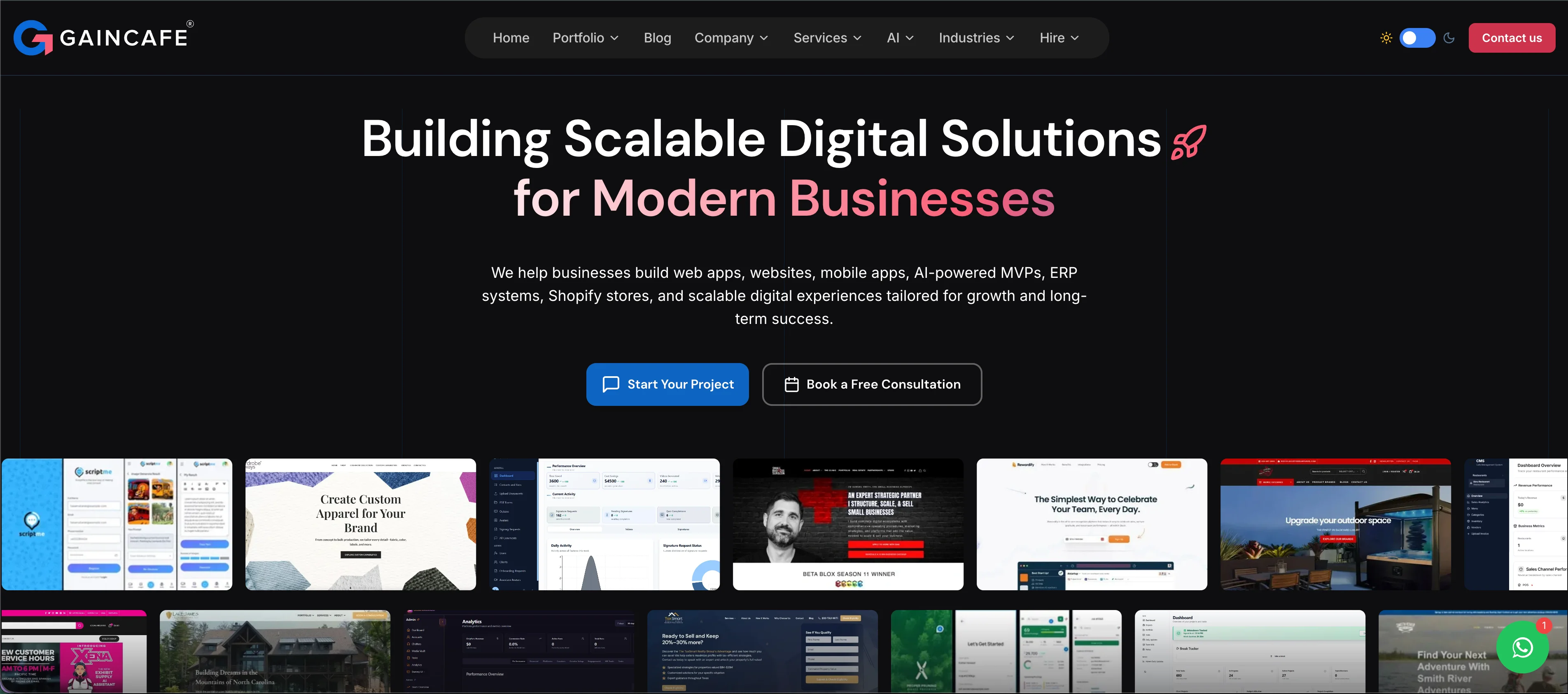
Gaincafe is an AI-first software and staff-augmentation company that serves US clients alongside the UK, UAE, and Australia, with more than 500 projects behind it over 12-plus years and a 5.0 rating on completed Upwork work. Its sweet spot is the IoT software layer: the apps, dashboards, cloud backends, and AI analytics that turn a stream of device data into something a business can act on.
A good example is its Fleetwise AI build, a fleet diagnostic and repair platform that pulls vehicle data into one place with real-time visibility and predictive insight. That is where IoT quietly pays for itself, at the decision layer, and Gaincafe does it at rates well under most US consultancies. You can see the connected-fleet work in the Fleetwise AI case study.
Location: India (serves USA, UK, UAE, Australia) · Founded: 2019 · Rating: 5.0 on Upwork
Best for: Startups and mid-market teams that need the software, cloud, app, and analytics layer done well without paying consultancy prices.
Honest note: For custom firmware and electronics, a hardware specialist is the better call, and Gaincafe will say so.
2. Softeq
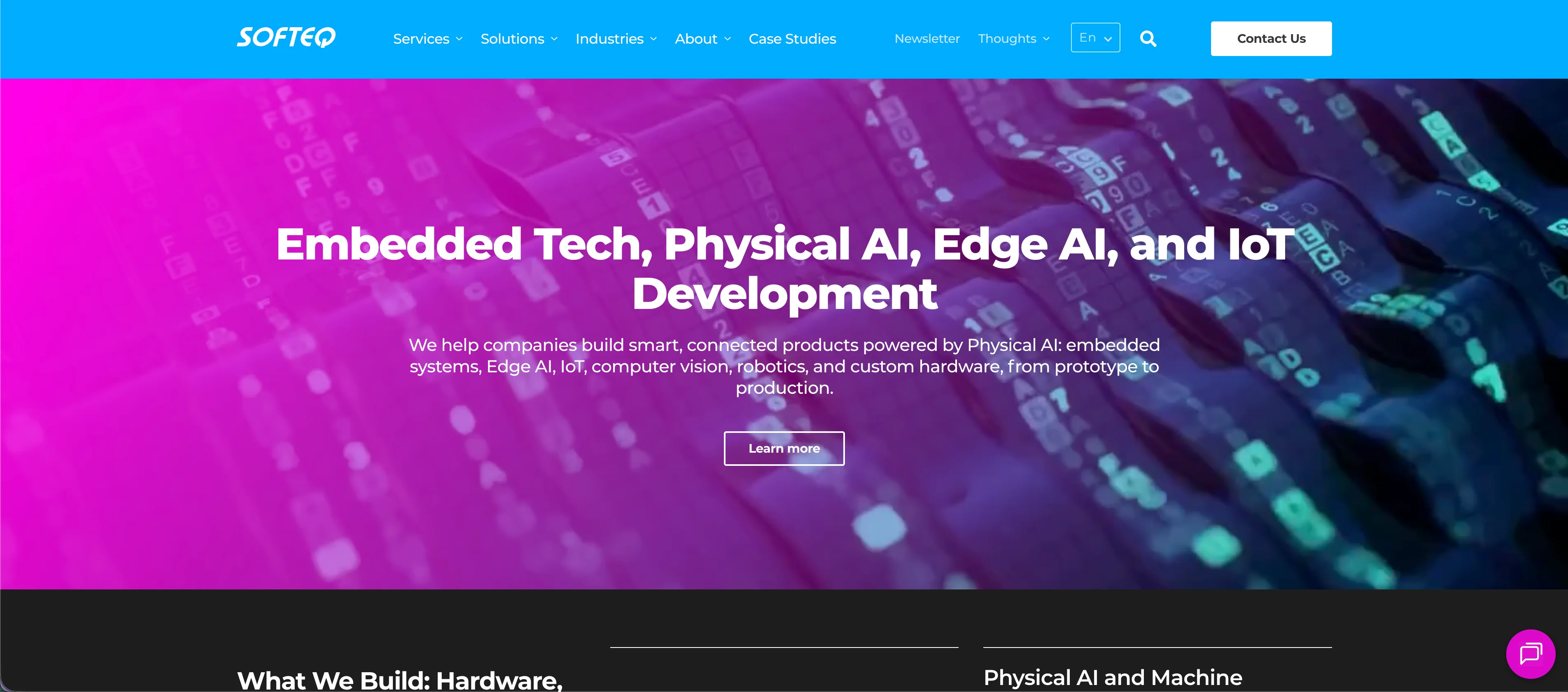
Softeq is one of the deepest hardware-software firms in the country, with genuine expertise in embedded software, electronics, and connected devices built from the chip up. Founded in 1997 and based in Houston, it works across healthcare, automotive, industrial automation, and consumer electronics, and it is a natural fit when your project needs real firmware engineering, not just an app layer.
Location: Houston, TX · Founded: 1997
Best for: Companies building hardware-heavy connected products from the firmware up.
Honest note: That hardware depth comes at a premium that a simple dashboard project does not need.
3. ScienceSoft
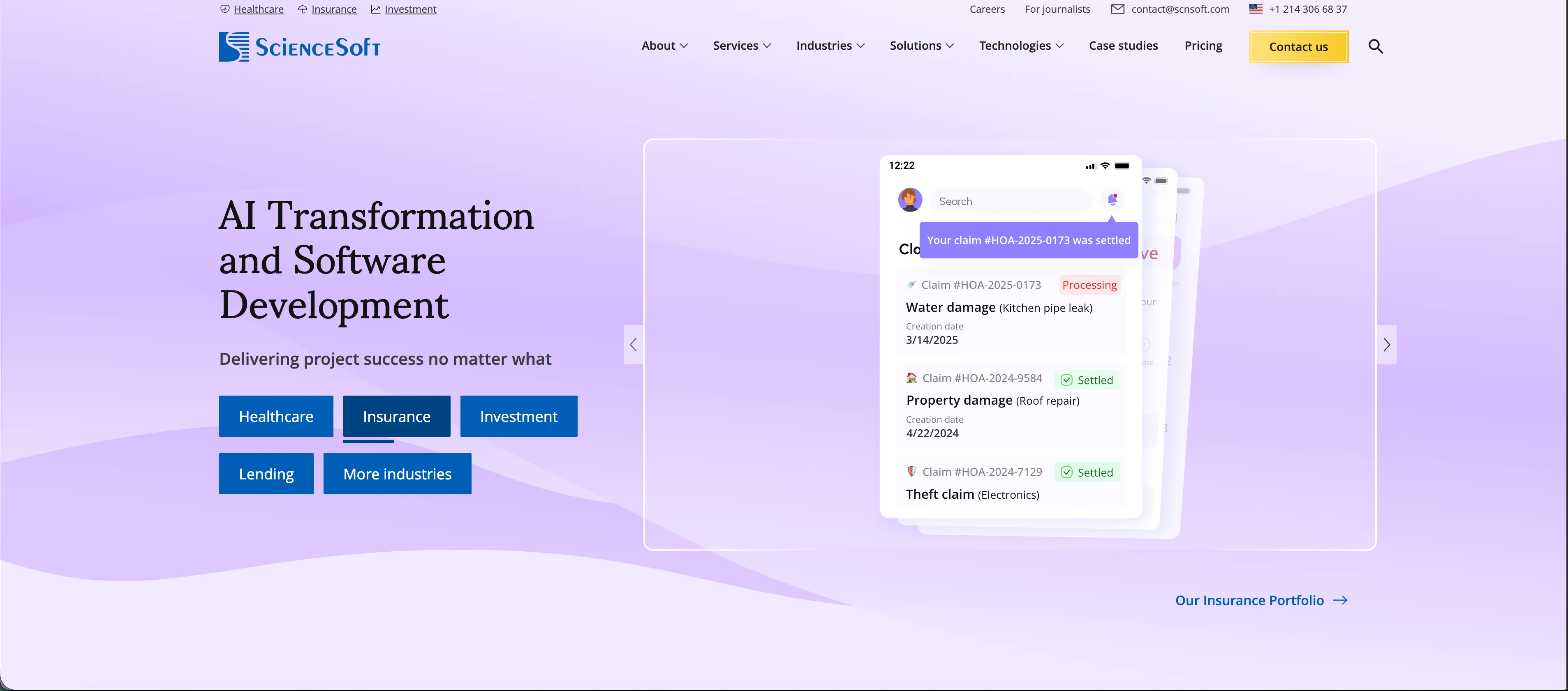
ScienceSoft has been building software since 1989, and that longevity shows in how it handles complex, multi-industry IoT programs. With a US base and broad experience across manufacturing, healthcare, retail, and logistics, its strength is enterprise-grade delivery and a services stack that reaches from device integration all the way to analytics.
Location: McKinney, TX · Founded: 1989
Best for: Enterprises wanting a mature, at-scale partner across several industries.
Honest note: Its enterprise process can feel heavy for a lean startup build.
4. Azilen Technologies
Azilen takes an enterprise, architecture-first approach to IoT, and it is one of the few firms comfortable across the whole stack, from firmware to cloud to user-facing apps. With a US presence and a strong consulting phase, it is often chosen for industrial and mission-critical work where reliability is not optional and legacy systems need to connect to modern platforms.
Location: San Francisco and Irving, TX (global team)
Best for: Enterprises wanting end-to-end IoT without juggling multiple vendors.
Honest note: Its enterprise focus is more than a small connected-product startup usually needs.
5. Oxagile
Oxagile is engineering-first, with a focus on connected devices, cloud, AI integration, and industrial automation. It tends to shine on data-heavy systems, especially anything involving video, streaming, or real-time processing alongside device connectivity, which makes it a strong choice for demanding technical builds.
Location: New York, NY
Best for: Data-intensive connected systems that need real engineering muscle.
Honest note: Its depth is overkill for a simple monitoring dashboard.
6. Simform
Simform is a US-serving engineering company that builds the application and cloud layer around connected products. It is a practical choice if you already have devices and need strong cloud and app work, particularly when you want IoT delivered alongside broader web, mobile, and DevOps in one engagement.
Location: Orlando, FL (global delivery)
Best for: Businesses wanting IoT software as part of a wider build.
Honest note: Stronger on the software layer than on custom hardware.
7. ArcTouch
ArcTouch, based in San Francisco, has built its reputation on beautifully made companion apps for connected products, from wearables to home-automation devices to Bluetooth and sensor-powered gadgets. If your IoT product is consumer-facing and the app experience is central to it, ArcTouch is a strong contender.
Location: San Francisco, CA · Founded: 2007
Best for: Consumer connected products where the companion app is the experience.
Honest note: Its design-led strength is best paired with a hardware partner for device-heavy builds.
8. Velvetech
Velvetech is a Chicago-based custom-software and IoT firm known for connected solutions in manufacturing, logistics, healthcare, and finance. It takes a consulting-led approach, which suits companies that want a partner to help shape the strategy and find the operational win, rather than just execute a fixed spec.
Location: Chicago, IL
Best for: Businesses after strategy-led IoT for operational efficiency.
Honest note: A consulting-led model can be more than a simple, well-defined build requires.
9. Intellectsoft
Intellectsoft is a US-serving digital engineering firm that folds IoT into broader digital transformation, combining it with cloud, blockchain, and AI. It fits enterprises modernizing operations that see IoT as one piece of a larger program rather than a standalone product, particularly in construction, healthcare, and enterprise sectors.
Location: Silicon Valley, CA · Founded: 2007
Best for: Enterprises building IoT into a wider transformation effort.
Honest note: Its broad focus means you should confirm specific IoT depth for your exact use case.
10. HQSoftware
HQSoftware is a US-based IoT specialist that has been at it since 2001, with real experience across industrial IoT, smart city, agriculture, automotive, and healthcare. That long, focused track record makes it a dependable pick for connected projects that need a team which has genuinely done this before.
Location: USA · Founded: 2001
Best for: Businesses wanting an experienced, IoT-focused partner across industries.
Honest note: A mid-sized firm, so very large enterprise programs may want more scale.
11. Yalantis
Yalantis is a product-engineering company serving US clients, building enterprise-grade connected solutions in healthcare, logistics, and other data-heavy fields. Its strength is product and platform engineering, so it suits teams that want a connected platform built to grow and evolve, not just ship once.
Location: US-serving (global delivery) · Founded: 2008
Best for: Scale-ups and enterprises building a connected platform meant to last.
Honest note: Product-engineering focus fits ongoing platforms better than a one-off build.
12. Very
Very is a US IoT specialist that brings hardware, firmware, and machine learning together under one roof, with a strong reputation for connected-product work and a distributed senior team. It is a good fit when your product genuinely spans device and data, and you want one partner who understands both ends.
Location: Chattanooga, TN (distributed)
Best for: Connected products that combine hardware, firmware, and ML.
Honest note: A boutique team, so timelines depend on current capacity.
13. SumatoSoft
SumatoSoft is a Boston-based custom-software company with a solid, full-stack IoT practice covering connected devices, dashboards, edge AI, and data solutions across manufacturing, logistics, healthcare, and energy. It earns a spot for mid-market projects that value clear communication and dependable delivery without a top-tier consultancy price tag.
Location: Boston, MA · Founded: 2012
Best for: Mid-market teams wanting reliable, well-priced IoT software.
Honest note: Best suited to mid-market scope rather than the largest enterprise rollouts.
14. Vention
Vention serves US clients, including startups and scale-ups, with IoT and connected-product capability plus a deep bench of engineers. It is best known for embedding strong developers directly into existing teams, so it fits funded startups that need to add senior IoT talent fast without a long hiring cycle.
Location: New York, NY · Founded: 2002
Best for: Funded startups extending their own engineering team.
Honest note: Its augmentation model assumes you have in-house technical leadership.
15. DataArt
DataArt is a long-established, New York-based engineering firm with a genuine IoT practice, especially in data-intensive and regulated industries like healthcare, finance, and travel. Operating since 1997, it brings serious engineering maturity to connected platforms that need to handle sensitive data reliably.
Location: New York, NY · Founded: 1997
Best for: Enterprises wanting engineering maturity for data-heavy, regulated IoT.
Honest note: Enterprise pricing and process are more than a lean startup build needs.
Not sure which IoT partner fits your project?
Tell us your devices, data, and goals, and we will point you to the right kind of team for the job.
Talk to an IoT ExpertThe 15 IoT Companies Compared at a Glance
| Company | Location | Core Strength | Best For |
|---|---|---|---|
| Gaincafe Technologies | India (serves USA) | Software, cloud, app, AI analytics | Startups and mid-market |
| Softeq | Houston, TX | Embedded, firmware, hardware | Hardware-heavy products |
| ScienceSoft | McKinney, TX | Enterprise, multi-industry | Large IoT programs |
| Azilen Technologies | San Francisco / Irving, TX | End-to-end enterprise IoT | Full-stack enterprise builds |
| Oxagile | New York, NY | Data-intensive systems | Real-time and streaming data |
| Simform | Orlando, FL | Cloud and app engineering | IoT plus broader software |
| ArcTouch | San Francisco, CA | Companion apps, wearables | Consumer connected products |
| Velvetech | Chicago, IL | Strategy-led automation | Operational efficiency |
| Intellectsoft | Silicon Valley, CA | Digital transformation | Enterprise modernization |
| HQSoftware | USA | IoT-focused, multi-industry | Experienced IoT partner |
| Yalantis | US-serving | Product and platform engineering | Connected platforms at scale |
| Very | Chattanooga, TN | Hardware, firmware, ML | Device-plus-data products |
| SumatoSoft | Boston, MA | Full-stack IoT, edge AI | Mid-market projects |
| Vention | New York, NY | Team augmentation | Startups extending teams |
| DataArt | New York, NY | Data-heavy, regulated IoT | Enterprise data platforms |
Which IoT Company Wins for Each Use Case
Not every firm fits every project. The best choice depends on which layer your challenge lives in, so here is the shortcut.
- Best for the software and analytics layer: Gaincafe Technologies, for apps, dashboards, cloud, and AI on device data at competitive rates.
- Best for hardware and firmware: Softeq and Very, for embedded and electronics engineering.
- Best for large enterprise programs: ScienceSoft, Azilen, and Intellectsoft.
- Best for data-intensive, real-time systems: Oxagile and DataArt.
- Best for consumer connected products: ArcTouch, for design-led companion apps.
- Best for strategy-led operational IoT: Velvetech.
- Best for well-priced mid-market builds: SumatoSoft and HQSoftware.
- Best for extending your own team: Vention, for senior engineer augmentation.
The hard part of IoT is not connecting one device. It is keeping thousands of them secure, in sync, and useful at scale, so pick the partner built for your hardest layer.
Choosing the wrong partner is expensive
Get a second opinion before you commit to any IoT development team.
Request a Free ReviewWhat an IoT Development Company Actually Does
It helps to know what you are buying. A capable IoT company can work across five connected layers, though very few are equally good at all of them. There are the devices and firmware at the edge, the connectivity that carries the data, the cloud and data layer that stores and processes it, the applications people interact with, and the analytics and AI that turn all those readings into alerts, predictions, and decisions.
Hardware-first shops own the bottom two layers. Software-first partners own the top three. When you know which layers your project needs, you stop overpaying a firmware specialist to build a dashboard, or asking a software team to fabricate electronics. Connecting those layers cleanly, especially to existing business systems, is where solid API integration work earns its place.
How to Choose the Right IoT Development Company in USA
Once you have a shortlist, match each firm to the layers you need, then ask the questions that make weak partners squirm. A vague answer, especially on security or production experience, is your cue to keep looking.
- Ask which layers they build in-house and which they quietly outsource. A firmware shop and a software shop are different animals.
- Ask for real production deployments, then ask what broke in the field and how they fixed it. Anyone can demo. Fewer can ship and maintain.
- Dig into device security, encryption, and standards like ISO 27001, since IoT widens your attack surface.
- Confirm genuine data and AI capability if you want predictive maintenance, not just charts, which is where our AI automation work tends to focus.
- Get it in writing that you own the firmware, code, and cloud accounts at handover.
- Check Clutch and G2 reviews rather than the testimonials on a company's own homepage.
Do not hire an IoT company for the demo. Hire it for how it handles the thousandth device and the security patch two years from now.
What It Costs to Work With a US IoT Company
Cost is not the focus of this list, but a quick orientation helps. Most custom IoT builds in the USA land between $40,000 and $150,000, a dashboard on existing devices can start around $10,000, and enterprise or industrial-scale deployments run past $500,000. Premium US consultancies bill $200 to $300 an hour, while capable global teams serving US clients deliver comparable software work for far less.
Whatever the number, remember that the device is a one-time cost while cloud, security, and monitoring are a monthly line for the life of the product.
IoT Development Trends in 2026
A quick read on where things are heading, which doubles as a test of whether a partner is current. Edge AI is moving processing onto the device itself, cutting latency and cost and keeping systems alive when the connection drops. Private 5G networks are opening up real-time use cases in factories and logistics hubs that older networks could not carry. The Matter standard is making devices from different vendors work together, which speeds up smart-building projects. And AI is turning dashboards conversational, so an operator can just ask the system a question instead of hunting through charts. We dig into that connected-operations shift in our guide to AI for logistics.
Why Gaincafe Leads for the IoT Software Layer
Gaincafe earns the top spot here for the layer where most of the business value of IoT is won or lost: the software, cloud, apps, and analytics that turn device data into decisions. The Fleetwise AI platform is a concrete example, pulling vehicle data into a single view with real-time visibility and predictive insight.
With 500-plus projects over 12-plus years, clients across the USA, UK, UAE, and Australia, and a 5.0 rating on completed work, it delivers enterprise-grade quality at rates well below US-headquartered consultancies. It is also honest about scope. If you need custom firmware and electronics, it will point you to a hardware specialist. But for the connected app, dashboard, cloud, and analytics that most businesses actually need, this is exactly what it is built for, and for early-stage teams it can stand up a fast, validated first version through its MVP development services.
Book a consultation, walk us through your devices, data, and goals, and get an honest, fixed-scope roadmap for your connected product.
Ready to turn device data into decisions?
Work with an AI-first team backed by 500-plus projects and a 5.0 rating. Get a straight roadmap for your IoT software and analytics.
Book a Consultation