In 2026, technical debt has become the silent killer of enterprise growth. For many US businesses, the "if it ain't broke, don't fix it" mentality has led to a reliance on aging legacy systems that simply cannot keep pace with the era of Generative AI, real-time data analytics, and hyper-personalized customer experiences.
When your legacy application begins to hinder your agility, you face a critical strategic decision: Do you move your existing infrastructure to the cloud (Cloud Migration), or do you scrap the outdated codebase and start fresh (Software Rebuilding)?
At Gaincafe Technologies, we specialize in Legacy Software Modernization Services that bridge the gap between yesterday’s limitations and tomorrow’s possibilities. This guide explores the nuances of both strategies to help you determine which path aligns with your 2026 business objectives.
Not sure: cloud migration or full rebuild?
Share your current stack, pain points, compliance needs, and timeline. We’ll tell you which path wins (migrate, rebuild, or hybrid) and why,with a clear recommendation.
Understanding the Stakes of Legacy Systems
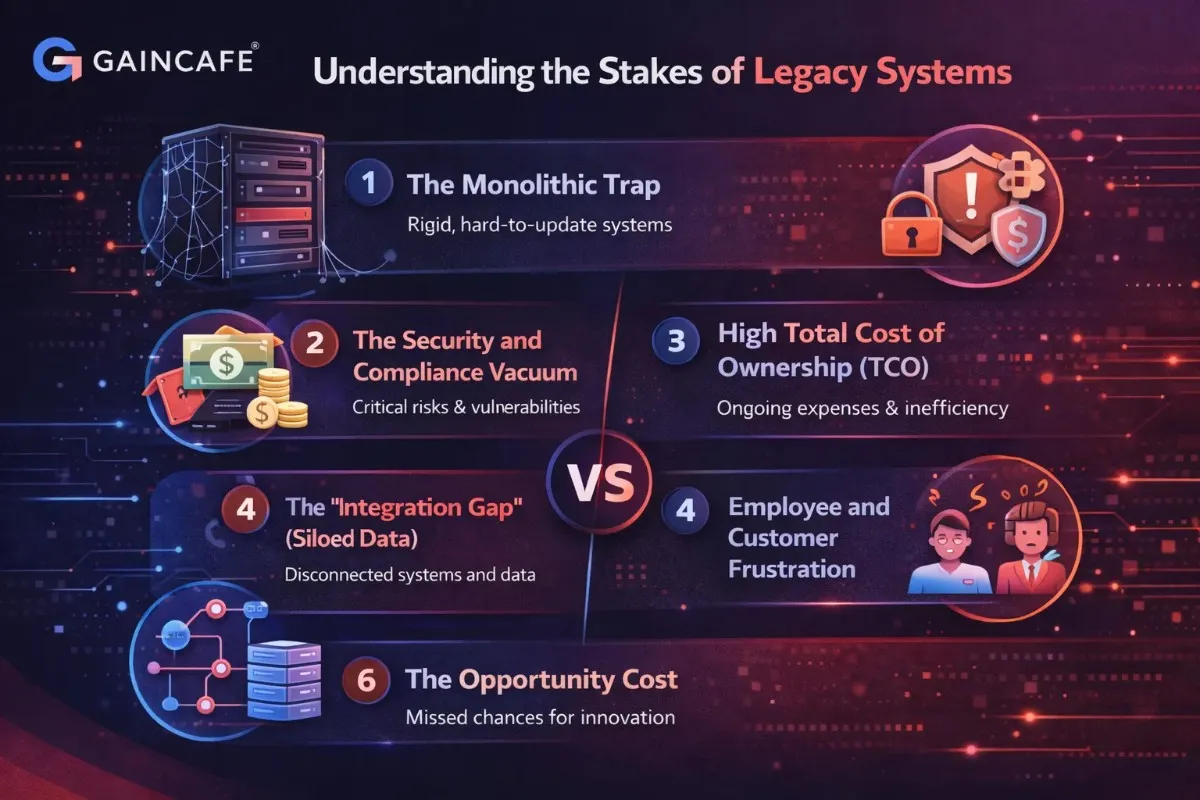
In the competitive landscape of 2026, a "legacy" system is no longer just defined by its age, but by its inability to adapt to the speed of modern business. For many organizations, these systems are "technical debt" that has accumulated over decades, eventually reaching a breaking point where the cost of maintenance exceeds the cost of innovation.
Understanding the stakes of keeping, or failing to modernize, these systems are critical for any long-term business strategy.
1. The Monolithic Trap
Most legacy systems are built on a monolithic architecture. In this model, every component of the software (the database, the user interface, and the business logic) is interconnected and interdependent.
The Stake: If you want to update a single feature or fix a small bug, you have to redeploy the entire application. This creates a high risk of "regression bugs," where fixing one part of the system accidentally breaks another unrelated part. In 2026, where competitors are deploying updates daily, a monolithic legacy system limits you to quarterly or yearly updates.
2. The Security and Compliance Vacuum
Legacy software often runs on outdated frameworks or operating systems that are no longer supported by their original creators.
- The Stake: Without regular security patches, these systems become a playground for modern cyber threats. Furthermore, for industries like healthcare or finance, legacy systems often fail to meet evolving compliance standards like HIPAA, SOC2, or GDPR. A single data breach on an unpatched legacy server can cost a US enterprise millions in fines and irreparable brand damage.
3. High Total Cost of Ownership (TCO)
There is a common misconception that legacy software is "free" because it is already paid for. In reality, legacy systems are often the most expensive items in an IT budget.
- The Stake:
- Specialized Labor: As older programming languages (like COBOL, Delphi, or early versions of .NET) fade out, the pool of developers who can maintain them shrinks, driving up their hourly rates.
- Infrastructure Costs: Legacy apps are rarely optimized for the cloud. They consume massive amounts of memory and CPU, leading to bloated cloud bills compared to modern, lightweight alternatives.
4. The "Integration Gap" (Siloed Data)
Modern business runs on connectivity. Your CRM needs to talk to your marketing automation tool, which needs to talk to your inventory management system.
- The Stake: Legacy systems often lack Modern APIs. This creates "Data Silos," where critical business information is trapped in a system that can't communicate with modern AI tools or mobile apps. To get data out, teams often resort to manual data entry or "fragile" workarounds, which lead to human error and massive inefficiencies.
5. Employee and Customer Frustration
In a "mobile-first" world, employees and customers expect intuitive, fast, and accessible interfaces.
- The Stake:
- Employee Retention: Forcing a modern workforce to use clunky, green-screen, or desktop-only legacy software leads to lower productivity and higher turnover.
- Customer Churn: If a customer can't access their data or perform a transaction on their phone because your backend is too old to support a mobile API, they will move to a competitor who can.
6. The Opportunity Cost
Perhaps the highest stake of all is the Opportunity Cost. While your team is busy "patching" a legacy system, they aren't building the next big feature or exploring AI integration.
- The Stake: In 2026, AI is the great differentiator. Legacy systems, with their messy codebases and siloed data, are nearly impossible to integrate with modern Large Language Models (LLMs) or predictive analytics. If you don't modernize, you aren't just staying still, you are falling behind at an exponential rate.
Cloud Migration: The "Lift and Shift" Approach
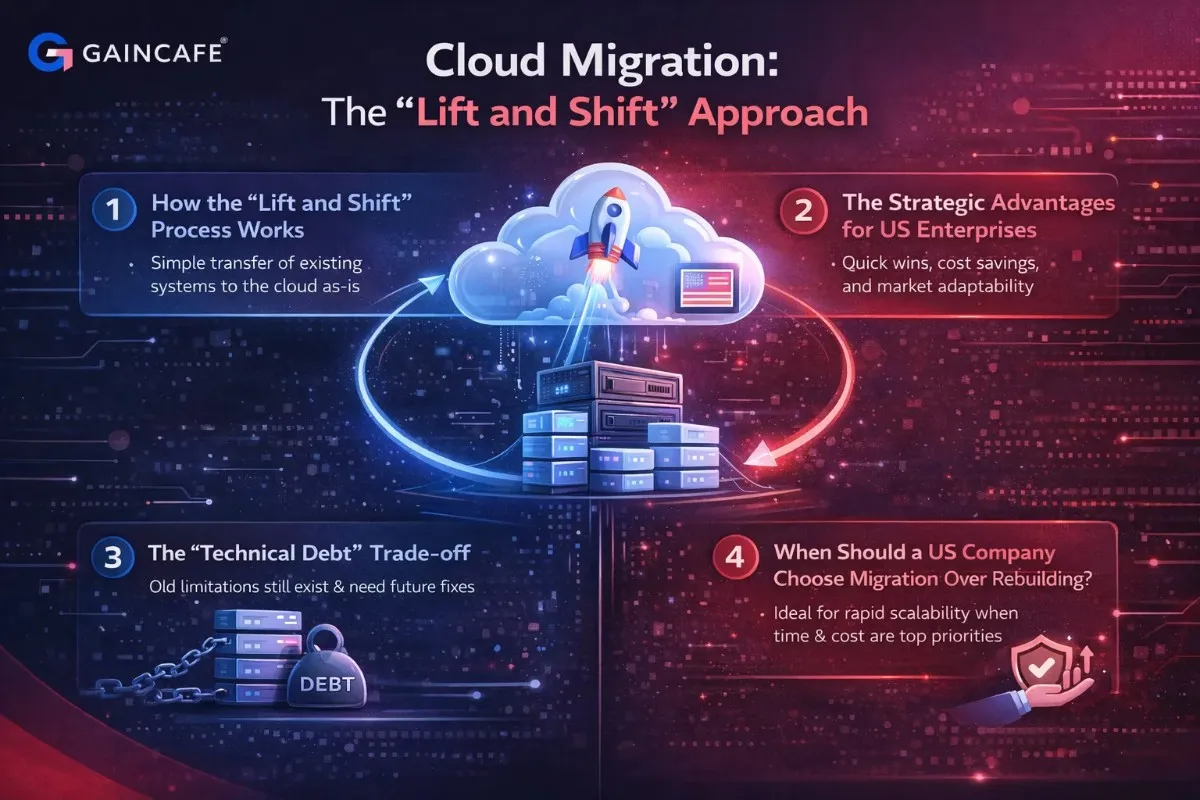
In the competitive landscape of US enterprise tech, Cloud Migration, specifically the "Lift and Shift" (Rehosting) strategy, is often the first step in a broader digital transformation journey. It is the process of moving an exact copy of an application and its data from an on-premise server to a cloud provider like AWS, Azure, or Google Cloud with minimal to no changes in the code.
For a US-based business looking to exit a costly data center contract or improve disaster recovery, this is the most direct path to the cloud.
How the "Lift and Shift" Process Works
Unlike a rebuild, which changes the engine, Lift and Shift changes the "garage." The application architecture remains monolithic, but it now benefits from the security and infrastructure of a world-class cloud provider.
The Strategic Advantages for US Enterprises
- Speed and Agility: Migration can be completed in weeks rather than months. For businesses facing hardware end-of-life or immediate scaling needs, this speed is a massive competitive advantage.
- Reduced Capital Expenditure (CapEx): You move away from buying and maintaining physical servers (CapEx) to a flexible, pay-as-you-go model (OpEx).
- Improved Business Continuity: By moving to the cloud, you immediately gain access to high-availability zones and automated backup systems, which are often more robust than local server rooms.
- Low Barrier to Entry: Because the code isn't being rewritten, the risk of breaking core business logic during the move is significantly lower compared to other modernization methods.
The "Technical Debt" Trade-off
While Cloud Migration is fast, it is important to understand what it doesn't do. It is often referred to as a "Band-Aid" fix for deeper architectural problems.
The "Hidden Cost" Warning: If your legacy application is "noisy" (inefficiently programmed), it will consume more CPU and RAM in the cloud than a modern app would. In the US market, where cloud costs are scrutinized, an unoptimized "Lift and Shift" can sometimes lead to higher monthly bills if not followed by a "Refactoring" phase.
When Should a US Company Choose Migration Over Rebuilding?
- Immediate Cost Savings: When the goal is to shut down expensive on-site server rooms immediately.
- Low-Priority Apps: For legacy systems that are stable and only need to be kept alive for compliance or archival purposes.
- The "Migration First" Strategy: Many US companies choose to migrate first to get into the cloud environment, and then optimize or rebuild individual components later once they are already in the cloud ecosystem.
Gaincafe Technologies ensures that your migration isn't just a move, but a strategic transition. We perform a pre-migration audit to ensure your data is clean and your cloud environment is configured for maximum security from day one.
Want a real TCO comparison for your legacy system?
We’ll estimate migration vs rebuild cost drivers (infra, licensing, refactor scope, downtime risk, and team effort) and deliver a simple 12–24 month ROI view.
Software Rebuilding: The "Ground-Up" Revolution
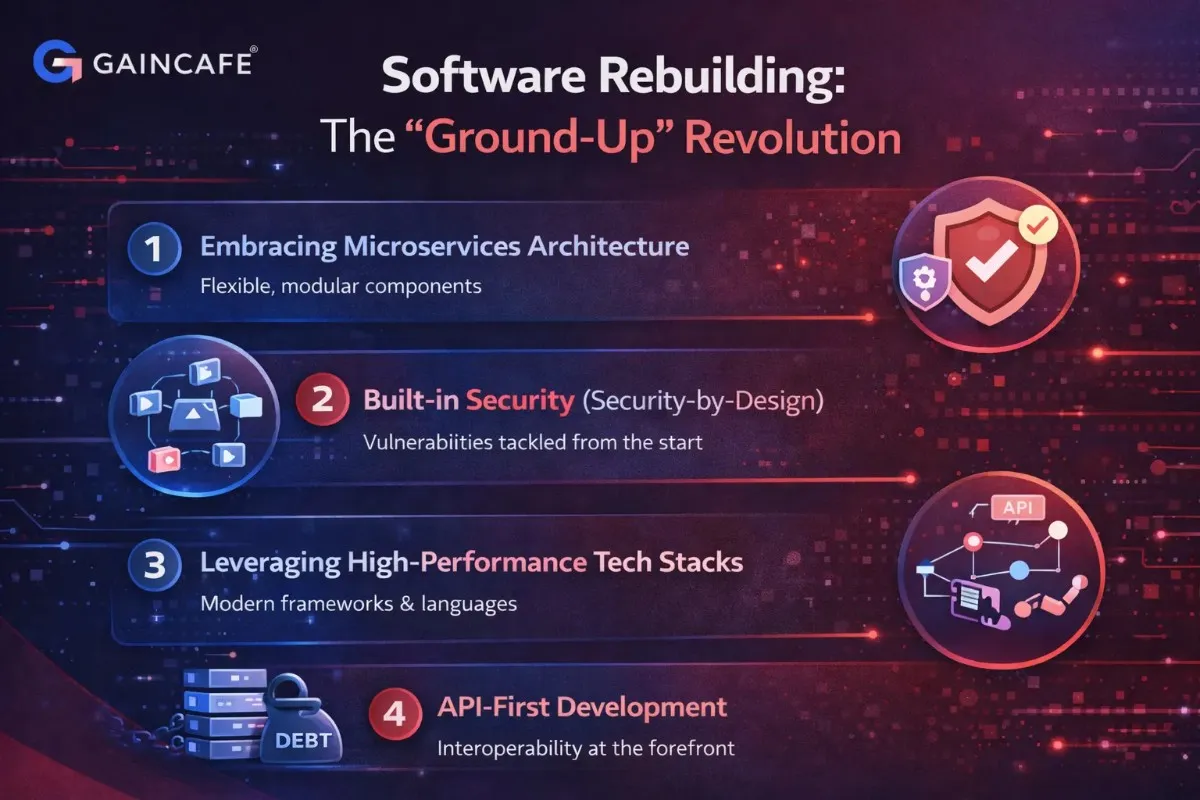
While Cloud Migration is about changing the "where," Software Rebuilding (also known as Rearchitecting) is about changing the "what" and "how." For a US-based enterprise aiming for long-term market dominance in 2026, this is the most transformative strategy. It involves discarding the legacy codebase and developing a new application from scratch using modern frameworks and cloud-native principles.
This isn't just a technical upgrade; it is a business pivot that aligns your technology with your 5-year vision.
1. Embracing Microservices Architecture
Legacy systems are typically "Monolithic," meaning all functions are tied together. Rebuilding allows you to shift to a Microservices Architecture.
- The Impact: Each business function (e.g., Billing, Inventory, User Profiles) becomes its own independent service. If your "Payment Gateway" needs an update, you can deploy it in minutes without touching the rest of the system. In the fast-paced US market, this "Agility" is what allows companies like Netflix and Amazon to deploy code thousands of times a day.
2. Built-in Security (Security-by-Design)
Legacy systems often have security "bolted on" as an afterthought. When you rebuild, you implement Zero-Trust Architecture from day one.
- The Impact: You can integrate modern authentication (like Biometrics or Multi-Factor Authentication) and ensure that every data packet is encrypted both in transit and at rest. For businesses handling sensitive American consumer data, this drastically reduces the risk of a catastrophic breach and ensures easier compliance with evolving regulations.
3. Leveraging High-Performance Tech Stacks
A rebuild allows you to move away from slow, resource-heavy languages to modern, high-performance stacks like React/Next.js for the frontend and Node.js, Go, or Python for the backend.
- The Impact:
- Lightning-Fast UI: Users get a "snappy" experience that feels like a modern app, not a 90s website.
- Efficient Resource Use: Modern languages are designed to run on less cloud power, significantly lowering your monthly AWS or Azure bills.
4. API-First Development
In a rebuild, the application is usually developed with an API-First mindset. This means the core of the software is built to communicate with anything.
- The Impact: This immediately opens the door for Mobile Application Development. You can build a mobile app, a web portal, and even connect to third-party partner tools all using the same backend. It turns your software from a "silo" into a "platform."
The ROI Analysis: Rebuilding for the Long Term
While the upfront cost of rebuilding is higher than migration, the long-term Return on Investment (ROI) is undeniable for US enterprises.
| Feature | Legacy (Migrated) | Rebuilt (Cloud-Native) |
|---|---|---|
| Development Speed | Slow (Months for changes) | Rapid (Days for changes) |
| Cloud Hosting Costs | High (Inefficient) | Low (Optimized hosting & easy updates) |
| AI/ML Readiness | Near Zero | High (Data-ready) |
| User Experience | Outdated/Clunky | Modern/Intuitive |
Why Rebuild with Gaincafe Technologies?
Rebuilding a core business system is a high-stakes project. At Gaincafe, we follow a "Modular Rebuilding" approach. We don't just shut down your old system; we build and replace components one by one to ensure zero downtime and a smooth transition for your users.
We focus on creating a Clean Code architecture that is easy for your internal teams to maintain, ensuring you aren't stuck with "Technical Debt" for another decade.
Head-to-Head: Cloud Migration vs. Software Rebuilding
Choosing between these two paths is a strategic decision that defines your company’s technical trajectory for the next decade. For most US enterprises, the choice boils down to a balance between Time-to-Value and Future-Proofing.
Below is a direct comparison to help you weigh the trade-offs:
| Feature | Cloud Migration (Rehosting) | Software Rebuilding (Rearchitecting) |
|---|---|---|
| Strategy | "Lift and Shift" (Same engine, new garage) | "Cloud-Native" (New engine, new car) |
| Primary Goal | Immediate cost reduction & hardware exit | Innovation, agility, and massive scaling |
| Implementation Time | 1–4 Months | 6–18 Months |
| Upfront Investment | Moderate | High |
| Long-term TCO | High (Maintenance & inefficient cloud use) | Low (Optimized hosting & easy updates) |
| Risk Factor | Low (Code remains untouched) | Medium/High (Requires change management) |
| AI/ML Potential | Very Limited | Built-in Readiness |
| Security | Perimeter-based (External) | Zero-Trust (Internal & External) |
Need a step-by-step modernization roadmap?
We’ll create a phased plan: assessment → target architecture → pilot → cutover, including security, data migration strategy, and rollback plan.
The Modernization Spectrum: Intermediate Strategies
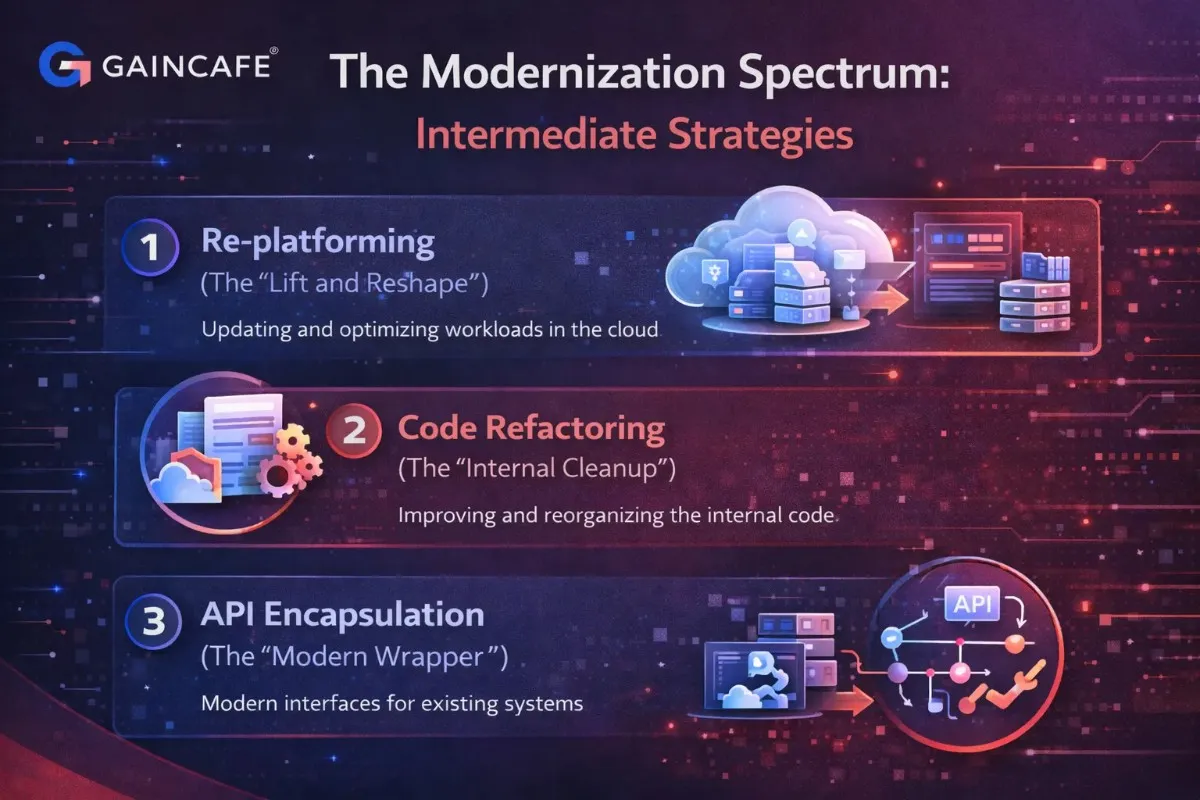
While the choice between a quick migration and a total rebuild is often presented as a binary "either/or" decision, the reality for most US enterprises is more nuanced. The Modernization Spectrum offers a middle ground, allowing you to balance immediate business needs with long-term technical health.
By adopting an intermediate strategy, you can address critical pain points without the massive upfront cost or the risk of a "Big Bang" system failure.
1. Re-platforming (The "Lift and Reshape")
Re-platforming is a step up from a simple migration. You move the application to the cloud but make small, high-impact adjustments to take advantage of cloud-native features.
- How it works: Instead of moving your on-premise SQL database as a "virtual machine," you move it to a managed service like Amazon RDS or Azure SQL.
- The Benefit: You eliminate the burden of patching and managing the database OS, improving security and performance while keeping your core application code exactly as it is. It is the most cost-effective way to "cloud-optimize" without a rewrite.
2. Code Refactoring (The "Internal Cleanup")
Refactoring is the process of restructuring existing code without changing its external behavior. It’s like keeping the exterior of your house but completely upgrading the electrical and plumbing systems inside.
- How it works: Your developers identify "bottlenecks" or "spaghetti code" and rewrite those sections for efficiency.
- The Benefit: It significantly reduces Technical Debt. In the US market, where developer time is expensive, refactoring makes the system easier (and cheaper) to maintain and update in the future, even if the overall architecture remains monolithic.
3. API Encapsulation (The "Modern Wrapper")
If your legacy system is stable but "unfriendly" to modern tools, encapsulation is the best strategy. You wrap the legacy system in a modern interface (API) so it can communicate with the rest of the digital world.
- How it works: You build an API Layer around the old software. This allows you to connect the legacy backend to a brand-new Mobile Application or a sleek web portal.
- The Benefit: You get a modern user experience and mobile accessibility immediately, while the old, reliable business logic continues to run in the background. It buys you time to rebuild the core later.
The Modernization Matrix: Comparison of Intermediate Paths
| Strategy | Effort | Impact | Risk | Best For |
|---|---|---|---|---|
| Re-platforming | Low | Medium | Low | Scaling and security without code changes. |
| Refactoring | Medium | Medium/High | Medium | Improving speed and removing bugs. |
| Encapsulation | Low | High (UX) | Very Low | Launching mobile apps or connecting to SaaS. |
Critical Considerations for the US Market in 2026
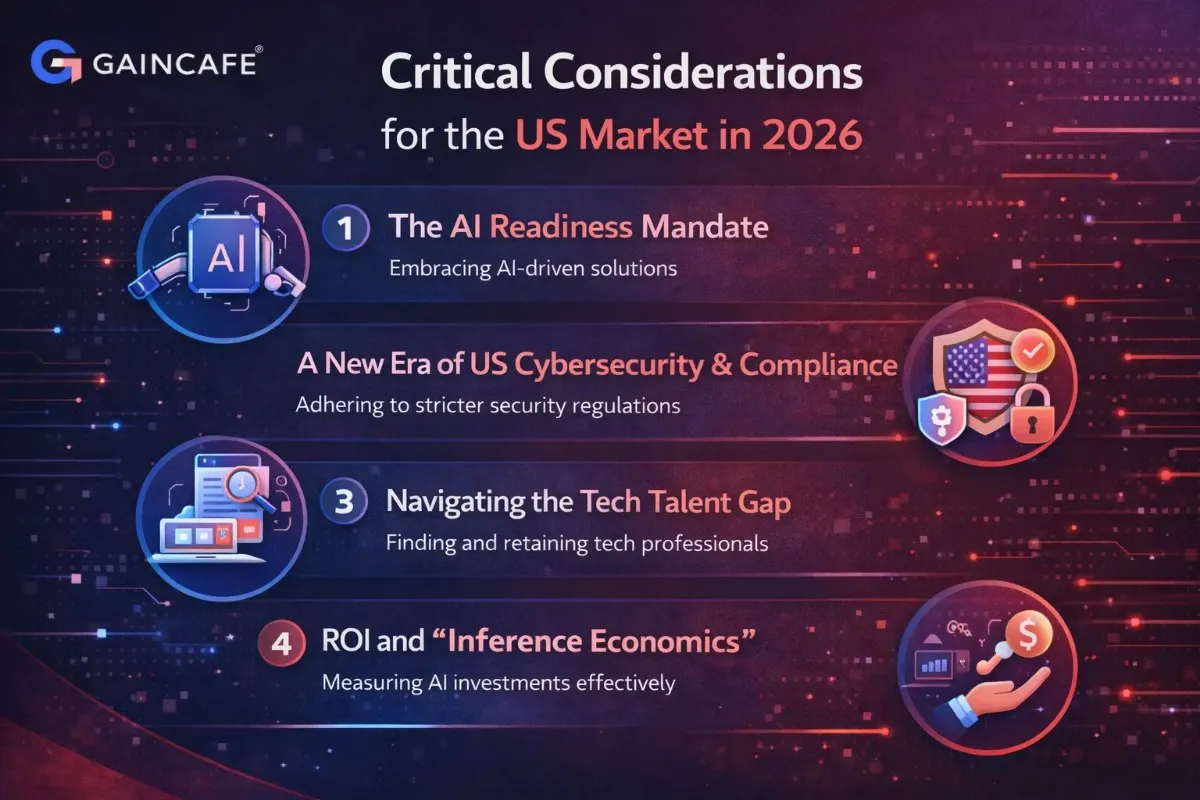
In the US market of 2026, modernization is no longer just about "upgrading." It is a strategic response to a landscape defined by aggressive AI adoption, a shifting regulatory environment, and a severe shortage of niche technical talent. To succeed, US enterprises must look beyond the code and consider how their infrastructure aligns with these three critical pillars.
1. The AI Readiness Mandate
By 2026, AI has moved from experimental pilots to "Agentic AI", autonomous systems that don't just suggest text but actually execute workflows. If your modernization strategy doesn't prioritize Data Readiness, your AI investment will likely fail.
- The Problem: Legacy data is often "dark", unstructured, siloed, and ungoverned. In 2026, "Agent-ready" data is the gold standard.
- The Solution: Modernization must include Semantic Context Engineering. This means organizing data so that AI agents can understand not just the value but the intent and rules behind the information.
- The Stake: US companies that fail to operationalize AI-ready data are seeing their "Time to Value" for AI projects stall, while competitors are using AI to cut operational costs by up to 30%.
2. A New Era of US Cybersecurity & Compliance
The US regulatory landscape in 2026 has shifted from "patchwork" guidelines to Practical Enforcement. Following the rescinding of some federal mandates in early 2026, the burden of liability has shifted squarely onto software producers and enterprises to prove their own "Risk-Based" security.
- Zero-Trust is the Default: With AI-driven attacks becoming more precise, US enterprises are moving toward Continuous Authentication and Monitoring. Your modernized app must be "Secure by Design," not "Secure by Patching."
- Regulatory Watch: The FTC and state-level authorities (like California’s CCPA updates) are aggressively enforcing Data Minimization and Minor’s Privacy (COPPA). Modernizing your system gives you the chance to bake these privacy-by-design principles into your core architecture.
- Software Bill of Materials (SBOM): Transparency is now a competitive advantage. US clients are increasingly demanding an SBOM, a "nutrition label" for your software, to ensure no vulnerable open-source components are hidden in your code.
3. Navigating the Tech Talent Gap
The US is currently facing a dual reality in the labor market. While generic IT roles are seeing a slowdown, there is an explosion in demand for Hybrid Skills, specialists who understand both AI/ML and Cloud Security.
- The Talent Crunch: There are currently over 700,000 unfilled cybersecurity positions in the U.S. alone.
- The Modernization Fix: Rebuilding or refactoring your legacy system allows you to use modern, popular languages (like Python or React) that are easier and cheaper to hire for. Maintaining a 20-year-old system in a "dead" language is becoming a massive financial liability as the pool of specialized developers disappears.
- AI-Assisted Development: In 2026, top US firms are using AI Coding Copilots to accelerate modernization. These tools can port legacy code to modern languages up to 70% faster, helping smaller teams achieve "enterprise-scale" results.
4. ROI and "Inference Economics"
As US companies scale AI, they are hitting an "Infrastructure Reckoning." Cloud bills are exploding because legacy architectures are not designed for the high computational demands of AI inference.
- Strategic Hybrid Cloud: Many US leaders are moving away from "Cloud-First" to "Strategic Hybrid." They use the Public Cloud for its elasticity (handling spikes) but keep steady, predictable AI workloads on-premises or at the "Edge" to control costs.
- Outcome-Driven Metrics: In 2026, Boards of Directors are no longer impressed by "AI pilots." They want to see ROAI (Return on AI Investment), measurable improvements in release cycles, uptime, and incident recovery speed.
How to Choose Your Modernization Path?
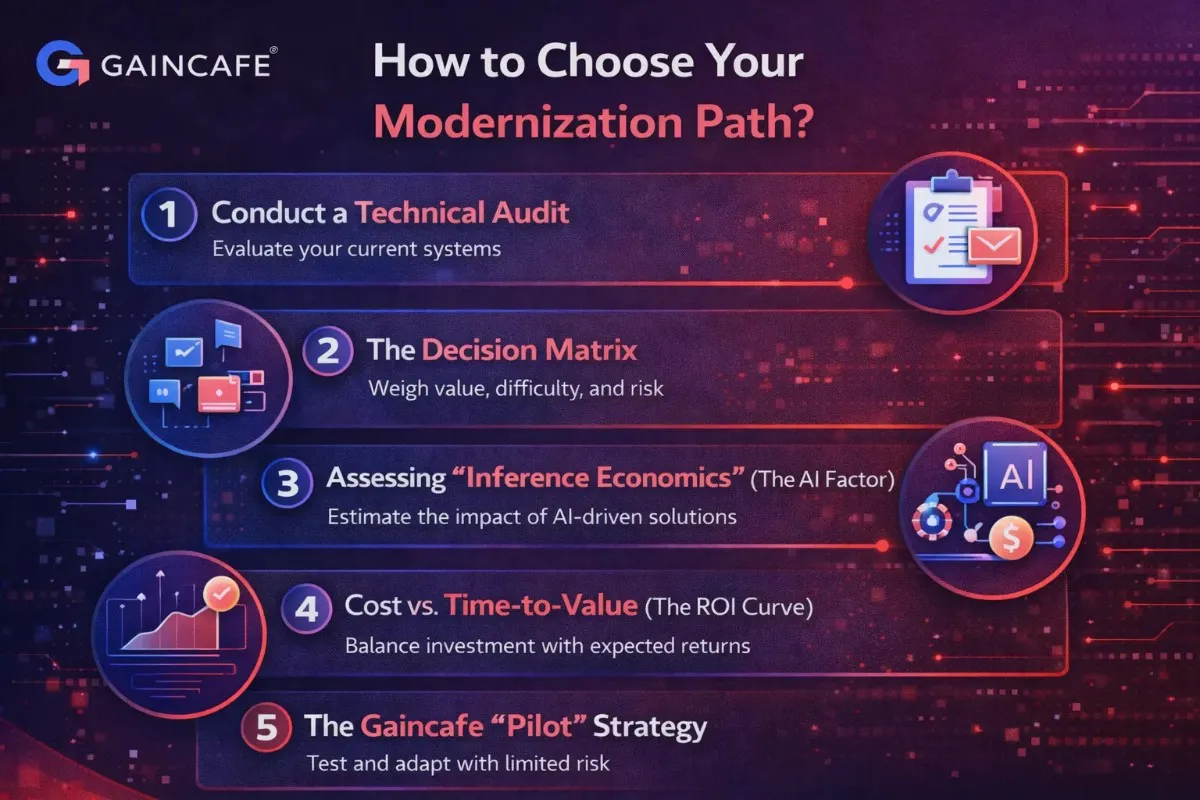
In 2026, choosing the wrong modernization path isn't just a technical error, it's a financial one. With US enterprises spending up to 70–80% of their IT budgets simply on maintenance, the decision-making process must be clinical and objective.
To help you decide, we have developed a 2026 Decision Framework based on three key pillars: Technical Viability, Business Value, and Risk Tolerance.
Step 1: Conduct a Technical Audit
Before picking a path, you must understand the "health" of your current system. A technical audit identifies where the "rot" is.
- Code Quality: Is the code documented? Can a new developer understand it?
- Dependencies: Are you reliant on a specific version of Java or Windows Server that is nearing end-of-life?
- Scalability: Does the app crash when 1,000 users join simultaneously?
Step 2: The Decision Matrix
Use the following criteria to map your application to the right strategy:
| If your situation is... | Your Modernization Path is... |
|---|---|
| Low Business Value + High Technical Debt | Retire: Shut it down and move data to an archive. |
| High Business Value + Low Technical Debt | Cloud Migration (Rehost): Move it to the cloud to save on hardware. |
| High Business Value + High Technical Debt | Rebuild: The ROI justifies a fresh start. |
| Medium Business Value + Tangled Code | Refactor: Clean up the "spaghetti" without changing the core. |
Step 3: Assessing "Inference Economics" (The AI Factor)
In 2026, every US CTO asks: "Can this system support AI Agents?"
- The Rebuild Path: If you need real-time AI insights or autonomous agents to handle customer workflows, you must rebuild. Legacy architectures cannot handle the data throughput required for modern LLM (Large Language Model) integration.
- The API Path: If you only need basic AI features, you can Encapsulate the legacy app with an API, allowing it to "talk" to external AI services without a full rewrite.
Step 4: Cost vs. Time-to-Value (The ROI Curve)
For US businesses, the Payback Period is a deciding factor.
- Migration offers a "Quick Win" (3–6 months), but costs escalate after Year 2 due to maintenance.
- Rebuilding has a "Slower Start" (12–18 months) but leads to a 300% increase in productivity and a 50% reduction in operating costs by Year 3.
Step 5: The Gaincafe "Pilot" Strategy
We never recommend modernizing everything at once. In 2026, the most successful US firms use a Phased Roadmap:
- Run a Pilot: Pick one non-critical module (like "Reporting") and rebuild it.
- Measure Results: Track KPIs like latency reduction and developer speed.
- Scale: Use the success of the pilot to justify the budget for the larger rebuild.
Ready to modernize without breaking production?
Whether you’re migrating to cloud, rebuilding modules, or doing a strangler-pattern rollout, Gaincafe can execute with minimal downtime and measurable delivery milestones.